

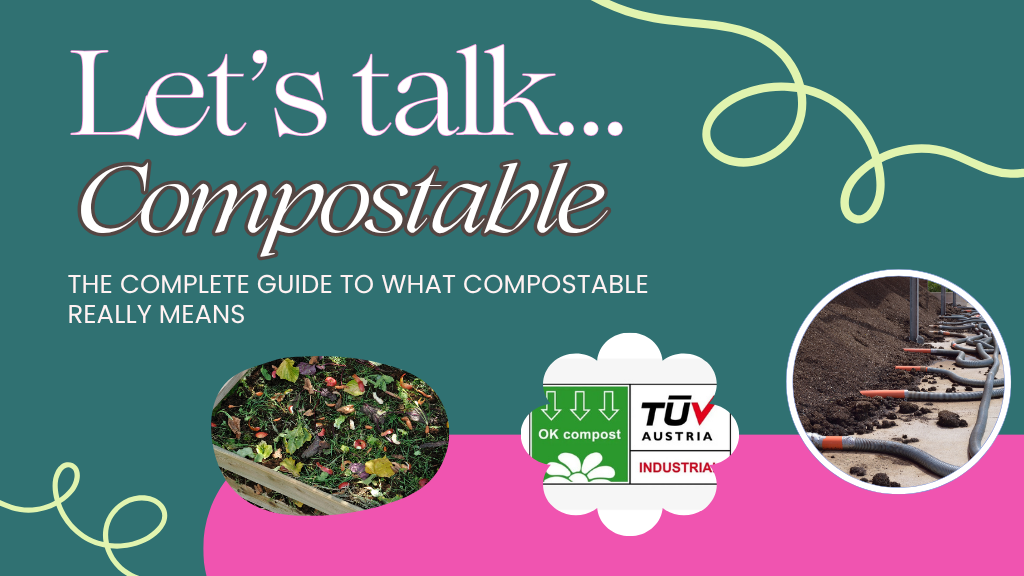
Compostable has become one of the most popular words in sustainable shopping. It sounds like the perfect solution: use it once and it simply disappears back into the earth. But the reality is a little more complicated than the labelling might suggest.
INDUSTRIAL VS HOME COMPOSTABLE
This is the most important distinction to understand:
- Home compostable products break down in a standard garden compost heap within a reasonable timeframe, typically 12 weeks under the right conditions.
- Industrially compostable products require specialist high-temperature composting facilities to break down properly.
Most products labelled simply as ‘compostable’ are in fact only able to be composted in industrial facilities. If you see the certification EN13432 this confirms the product or packaging is for industrial composting only. It’s been tested in high-heat, controlled conditions which a general garden compost heap is unlikely to ever achieve. Here in the UK, access to industrial composting facilities is limited and inconsistent at best, so if an industrially compostable product ends up in your household bin, it will most likely go to landfill where, without the right conditions, may not break down for decades and could even produce methane greenhouse gas.
Industrially compostable certifications require the materials to break down into 2mm pieces of less within 6 months, and leaving only a small amount behind. There may still be heavy metals present such as mercury or cadmium but the levels of these are set very low. In terms of ecotoxicity, then the compost must support healthy plant germination and growth.
WHAT TO LOOK FOR
If you’re buying compostable products, you may like to check:
- Is this home compostable or industrially compostable?
- What certification does it hold? (Look for ‘TUV OK compost HOME’ or ‘NFT51-800’ which certifies that the item will degrade in low-temperature garden compost heaps).
- What happens to the product if it goes to landfill? Will it emit greenhouse gases?
- Does it contain any plastic components, including coatings or linings?
OUR APPROACH
At Party Without Plastic®, we undertake due diligence with
all our sellers to ensure their products are single-use plastic free as our
primary standard, because it’s clearer and more verifiable. Many of the
products on our marketplace are also home compostable, but we don’t use that as
the headline claim unless the evidence supports it.
As with everything we do, it’s about transparency over marketing, so we always encourage you to ask questions. We'd love to hear your experience of purchasing compostable products. Do you assume if it says the item is ‘compostable’ that it means you can home compost it?

Share this via
Or copy link